Follow the Money: How Super PACs Override Your Vote
Federal law caps individual donations at $3,500 per election. But a system of super PACs, dark money groups, and bundlers lets wealthy interests spend hundreds of millions to decide who represents you — and they don’t need your permission.
A super PAC is spending in this race — and you can’t see its donors until after the vote.
Case study · CA-32 primary · June 2
Brad Sherman: $800,000 in dark money.Jake Levine: $776,665 already filed in independent expenditures by a super PAC whose donors you won’t see until after the vote.Marena Lin: $0.
Three candidates. Three different relationships to the money our campaign finance system was supposed to make visible — and isn’t. Every claim below cites the public record. Read the receipts and draw your own conclusion.
How the money is moving in CA-32
| Channel | Sherman | Levine | Marena |
|---|---|---|---|
| Direct individual contributions Fully disclosed in FEC Schedule A | Standard incumbent base | ~$39,500 from named crypto industry executives (Garlinghouse/Ripple, Yakovenko/Solana, Leshner/Compound, Neuner/Telcoin, +others — see Channel A) | Individual donors only, all under the $3,500 per-election cap |
| 501(c)(4) → super PAC pipeline Donors NEVER disclosed under federal law | $800,000 confirmed — Opportunity Forward Alliance → Valley-Westside United PAC → pro-Sherman ad. April 24 → 27. Plus a second $40,000 TV ad disseminated May 22. $840,000 total filed. (see Channel B) | None confirmed | None |
| New super PAC, donors disclosed only after the vote Reports filed June 20; primary is June 2 | None confirmed | $776,665 in independent expenditures now filed in Schedule E (May 14–29 ads, payee AL Media LLC) — split exactly half-and-half: $388,332 supporting Levine and $388,332 attacking Sherman. The latest ads run May 29 through Election Day. Politico originally reported a ~$600K buy — they have already blown past it by ~$177K. Only ~$105K in disclosed receipts on the books ($100,000 Larsen, $5,000 Caruso) — the remaining ~$671K already spent will be funded by donors voters won't see until the next super-PAC report on June 20, 18 days after the June 2 primary vote. (see Channel C) | None |
| Hidden / off-the-books support total | $840,000 filed (donors permanently hidden) | $776,665 already filed in independent expenditures (donors of ~$671K hidden until after the vote) + $39,500 direct from crypto execs | $0 |
All figures verified against FEC filings through the May 13, 2026 pre-primary reporting period. Each named line below is traceable to a specific Schedule A or Schedule E entry.
Sherman · Channel B
Filed and confirmed. Donors permanently hidden.
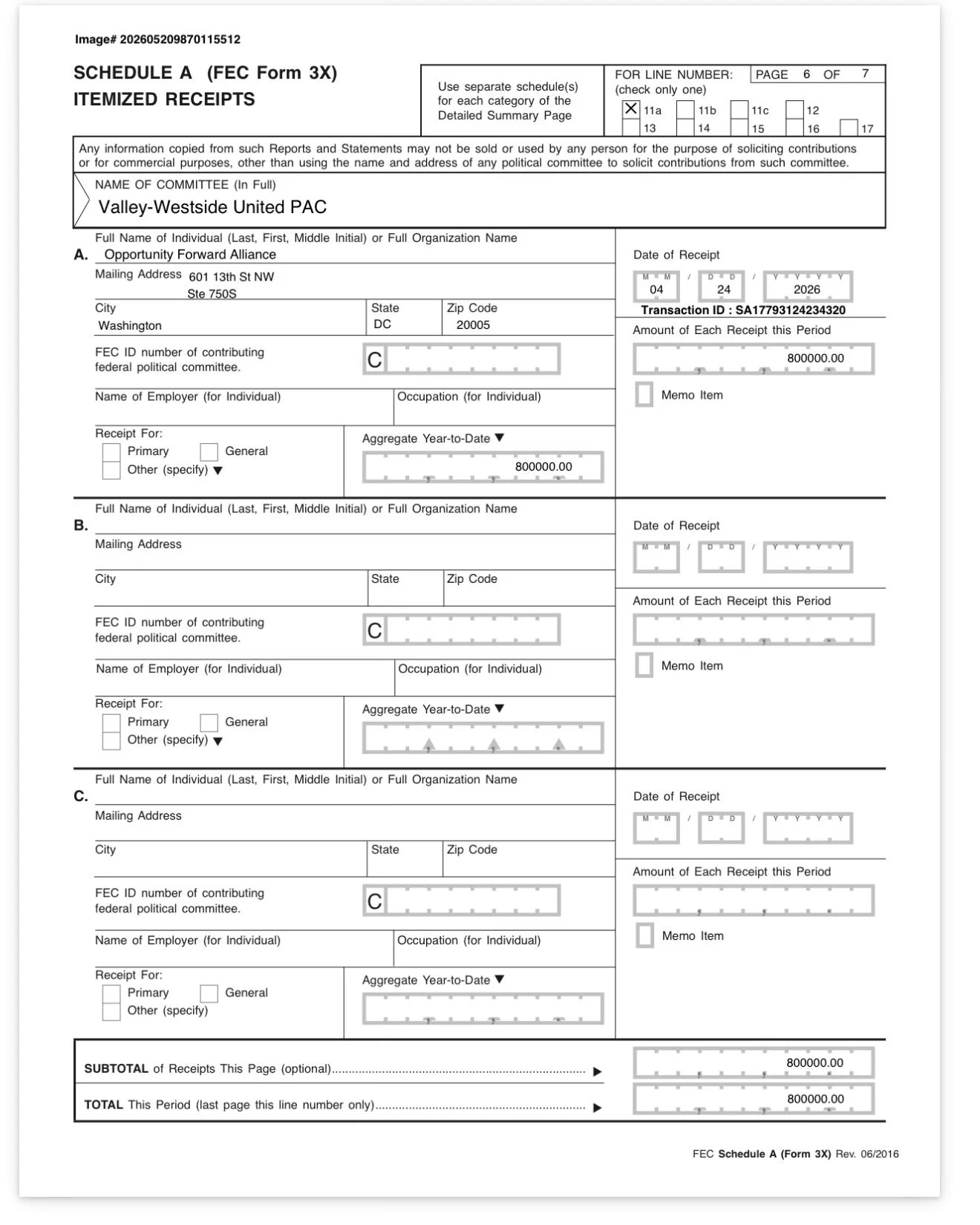
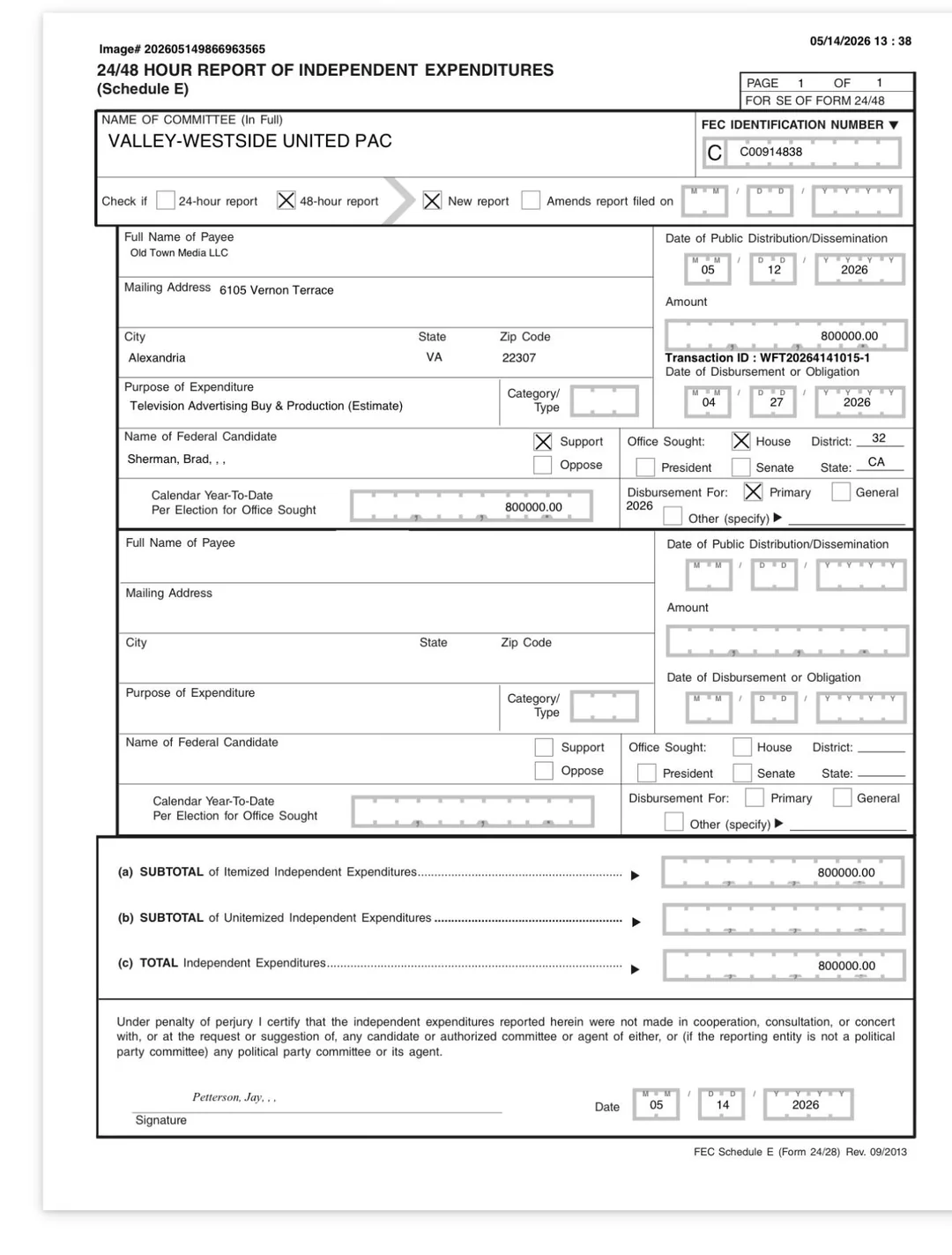
A DC 501(c)(4) named Opportunity Forward Alliance sent $800K to Valley-Westside United PAC on April 24. Three days later, the PAC obligated $800K to Old Town Media for a pro-Sherman TV ad. Under federal law, the people who funded the 501(c)(4) will never appear on the public record.
Read the receipts in Channel B ↓
Levine · Channel C
Filed and running through Election Day. Donors of ~$671K disclosed only after the vote.
New Era Leadership super PAC has filed $776,665 in independent expenditures (May 14–29) — split exactly half-and-half: $388K supporting Levine and $388K attacking Sherman. Payee: AL Media LLC. As of the latest committee receipts report, only $105K is on the books ($100K Larsen, $5K Caruso). The remaining ~$671K already spent will be funded by donors voters won’t see until June 20.
Next donor report: June 20 — 18 days after the June 2 primary.
Read the receipts in Channel C ↓
Jump to a channel
The argument
“We have a 30-year incumbent backed by $800,000 of the darkest money Citizens United made possible — funneled through a 501(c)(4) that will never name a single donor. We have a ‘new generation’ challenger carried by named crypto industry executives through the same system. And both of them stand up at our candidate forums and say they would end Citizens United.”
— Marena Lin
Levine · Direct contributions
Crypto industry executives in Jake Levine for Congress’s own filings
Nine named contributions totaling $39,500 — fully disclosed in FEC Schedule A, none refunded.
These are not dark money. They are fully disclosed in FEC Schedule A. Each named contribution below is traceable to a specific filing line item (sub_id). Every figure can be verified at fec.gov by anyone with an internet connection.
| Donor | Role & firm | Amount | Date |
|---|---|---|---|
| Brad Garlinghouse | CEO, Ripple | $7,000 | 2026-03-29 |
| Anatoly Yakovenko | CEO & co-founder, Solana Labs | $3,500 | 2025-12-22 |
| Paul Neuner | CEO, Telcoin | $7,000 | 2025-12-15 |
| Parker Spann | Executive, Telcoin | $7,000 | 2025-09 |
| Timothy Mahota | General Counsel, Telcoin Holdings | $250 | 2025-09-17 |
| Daniel Robinson | Investor, Paradigm | $7,000 | 2025-09-08 |
| Justin Slaughter | Federal policy, Paradigm | $250 | 2025-12-03 |
| Robert Leshner | CEO, Superstate (founder of Compound Finance) | $7,000 | 2025-08-04 |
| Colin McLaren | Engagement Director, Solana Policy Institute | $500 | 2025-09 + 2026-03 |
| Pure-crypto subtotal | $39,500 |
Each donor verifiable at FEC Schedule A for Jake Levine for Congress (C00914820). All entries remain on the books — none have been refunded as of the May 13, 2026 pre-primary report.
What candidates can do — and what Levine has chosen
A candidate has three tools to distance themselves from money or support they don’t want. Jake Levine, who pledged to take no corporate PAC money and presents himself as a clean-money “new generation” alternative to a 30-year incumbent, has used none of them:
- Refund direct contributions. He has not refunded any of the $39,500+ in contributions from crypto industry executives listed above.
- Disavow super PAC spending. He has not publicly asked New Era Leadership (the super PAC documented in Channel C below, currently spending six figures to support his campaign) to stop spending on his behalf.
- Disclaim endorsements. He has not disclaimed Rick Caruso’s endorsement, despite Caruso also contributing $5,000 to that same super PAC supporting him.
The pledge not to take corporate PAC money is real. It does not, by itself, address any of the three channels above.
What the donors are saying publicly
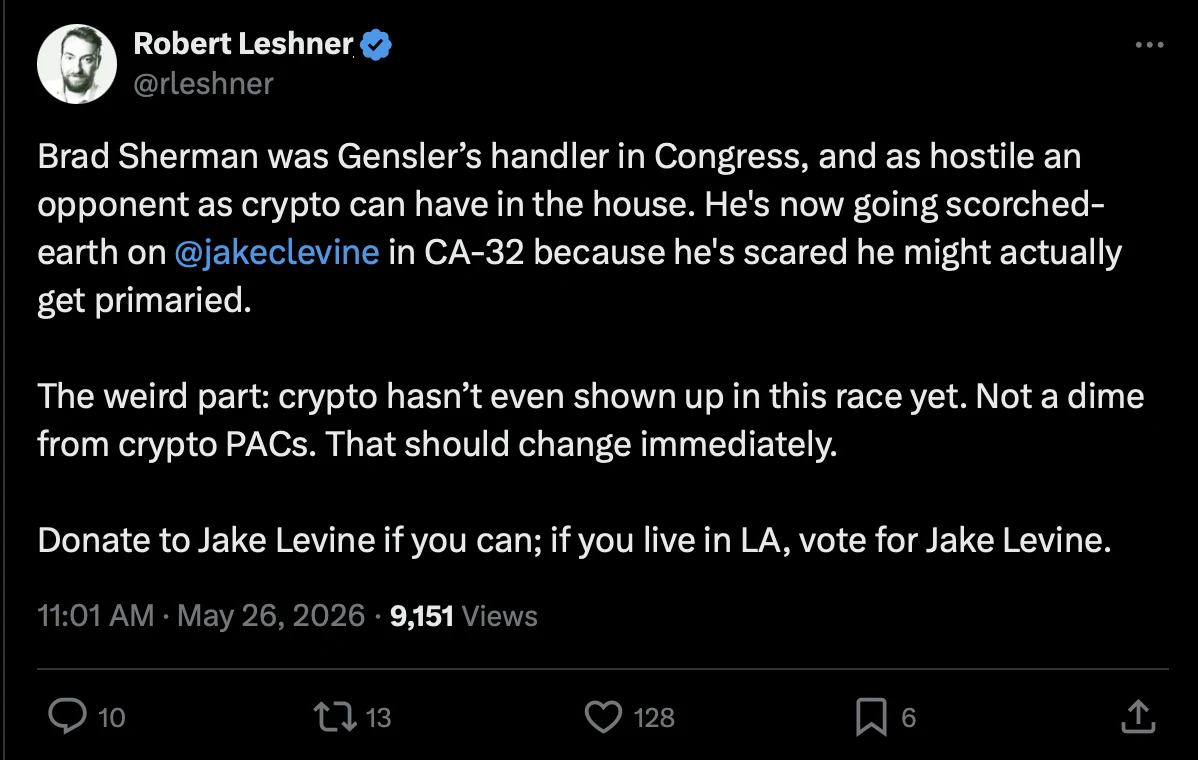
Robert Leshner — listed in the table above as a named Channel A donor (CEO of Superstate, founder of Compound Finance, $7,000 to Levine on August 4, 2025) — posted this from his verified Twitter account on May 26, 2026:
“Brad Sherman was Gensler’s handler in Congress, and as hostile an opponent as crypto can have in the house. He’s now going scorched-earth on @jakeclevine in CA-32 because he’s scared he might actually get primaried.”
“The weird part: crypto hasn’t even shown up in this race yet. Not a dime from crypto PACs. That should change immediately.”
“Donate to Jake Levine if you can; if you live in LA, vote for Jake Levine.”
— Robert Leshner (@rleshner), May 26, 2026 · 9,151 views as of screenshot
What the public record now establishes is no longer just that a crypto industry executive donated to Jake Levine. It is that the same executive is publicly soliciting additional crypto PAC money for this race and directly asking voters to support Levine. The Channel A donor list and the Channel C super-PAC spending now have a public point of orchestration in a named individual.
Sherman · 501(c)(4) → super PAC pipeline
$800,000. Three days. Donors will never be disclosed.
A textbook dark-money pipeline supporting a 30-year incumbent.
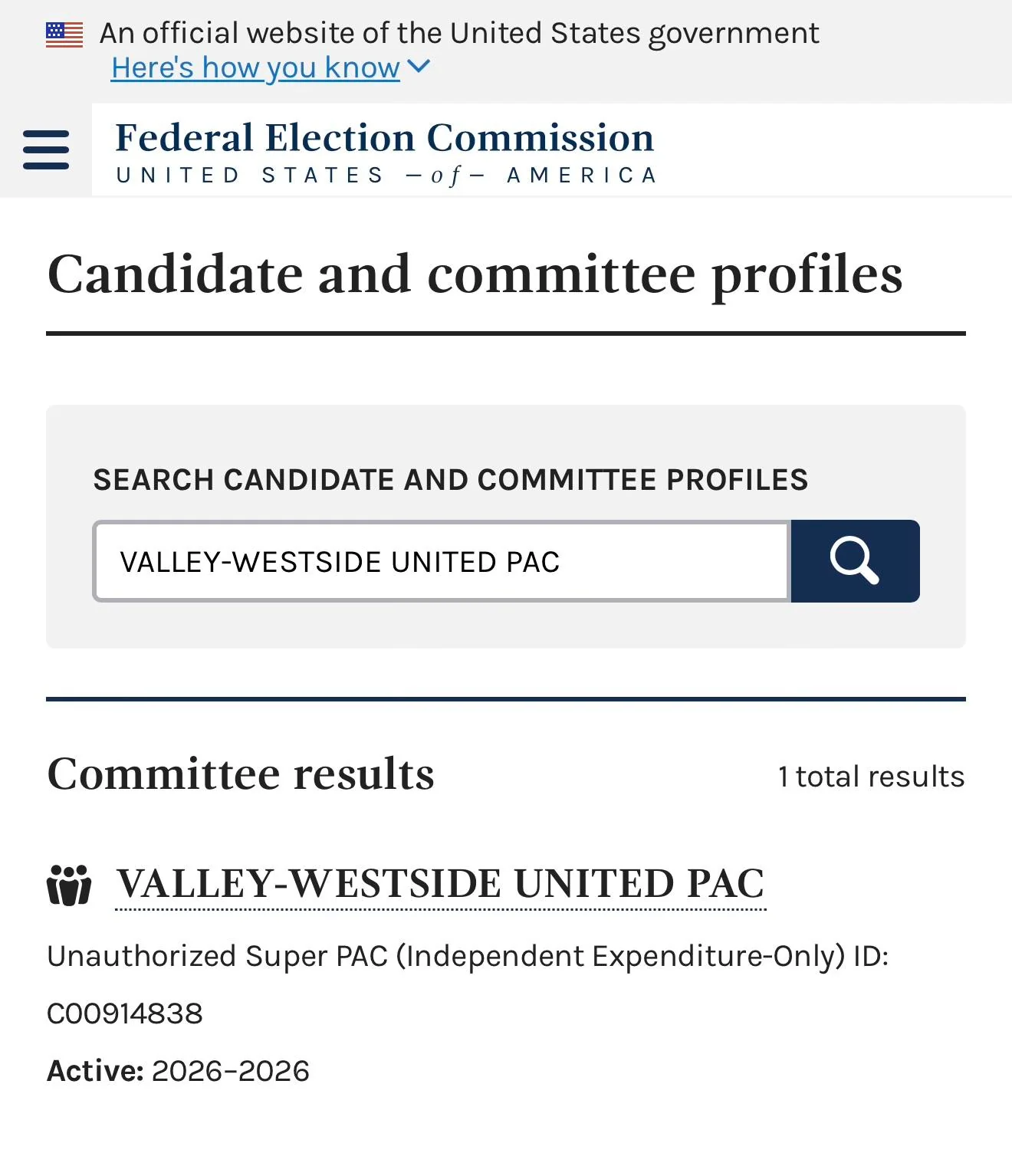
This is the textbook dark-money structure. A 501(c)(4) social welfare nonprofit takes anonymous contributions, gives them to a super PAC, and the super PAC spends them on candidate ads. The super PAC’s filing shows only the 501(c)(4) as the apparent donor; the actual people who funded the ad never appear on the public record under federal law.
The pipeline
Three days from money in to money obligated. The ad was already produced and waiting for funding to clear — that is the only way the timing works.
Two facts about the actors that the public record establishes:
- Valley-Westside United PAC was registered with the FEC on August 5, 2025 and was effectively dormant for its first eight months — total prior receipts of just $36,450 through year-end 2025, then $0 in receipts in February, March, and April monthly reports before the $800,000 spike. This is a new committee suddenly used to move one large sum.
- Opportunity Forward Alliance was registered as a DC nonprofit on December 17, 2025 — just over four months before sending the $800,000. It has no website, no public statements, and no presence beyond a registered DC mailing address. As a 501(c)(4), the people who actually funded the $800,000 are protected from public disclosure under federal law.
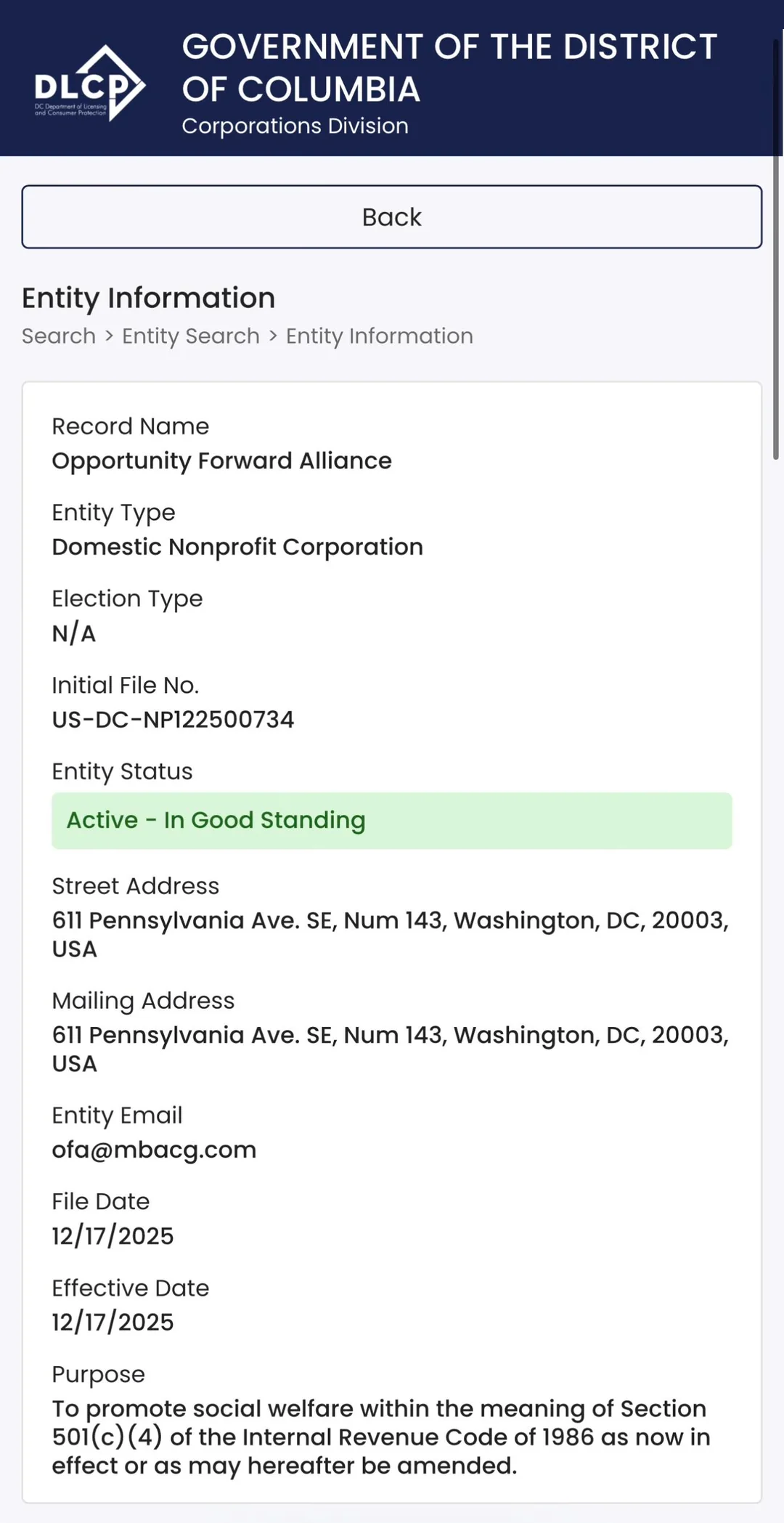
Who runs Opportunity Forward Alliance — directors, registered agent, beneficial owner (public DC filings)
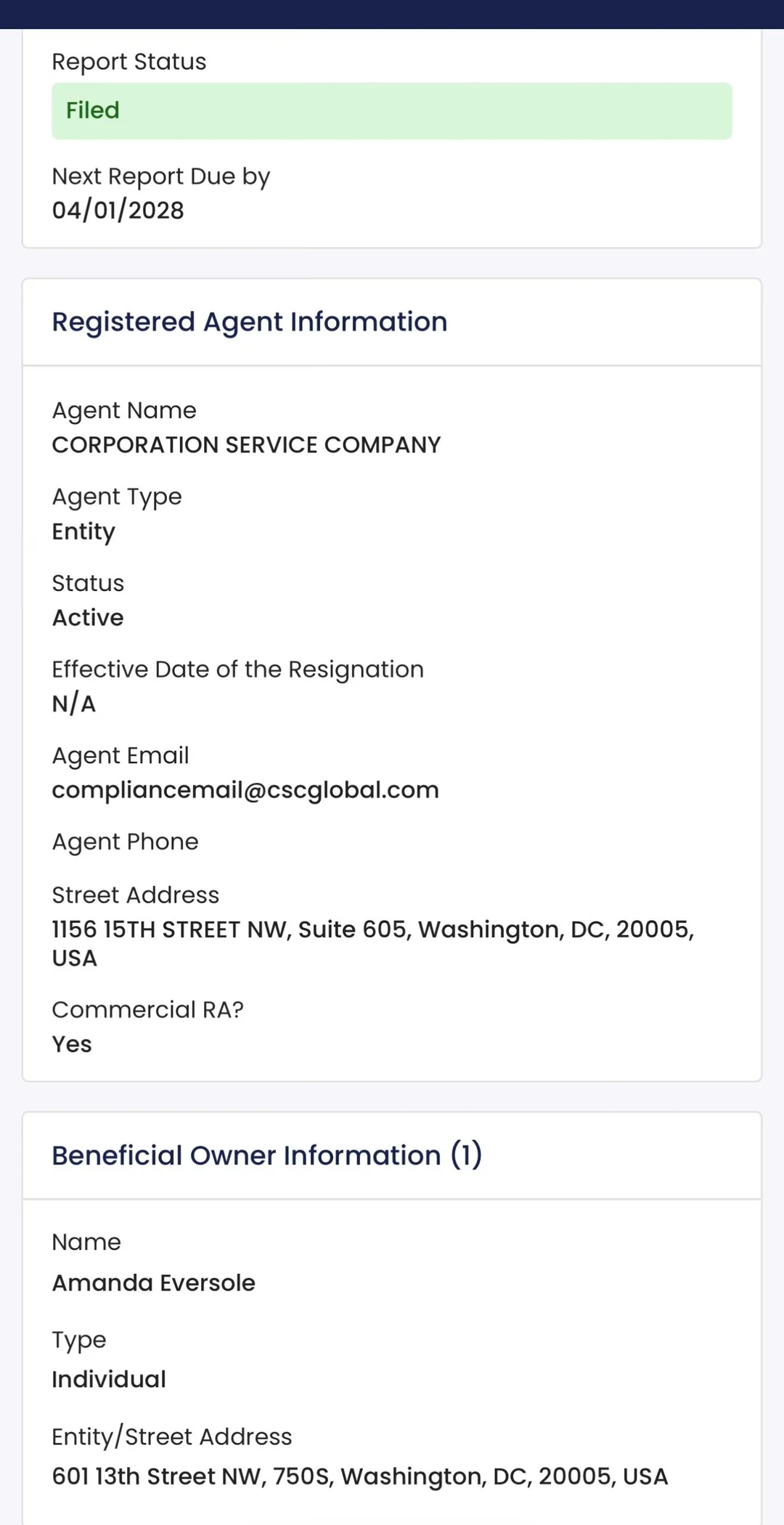
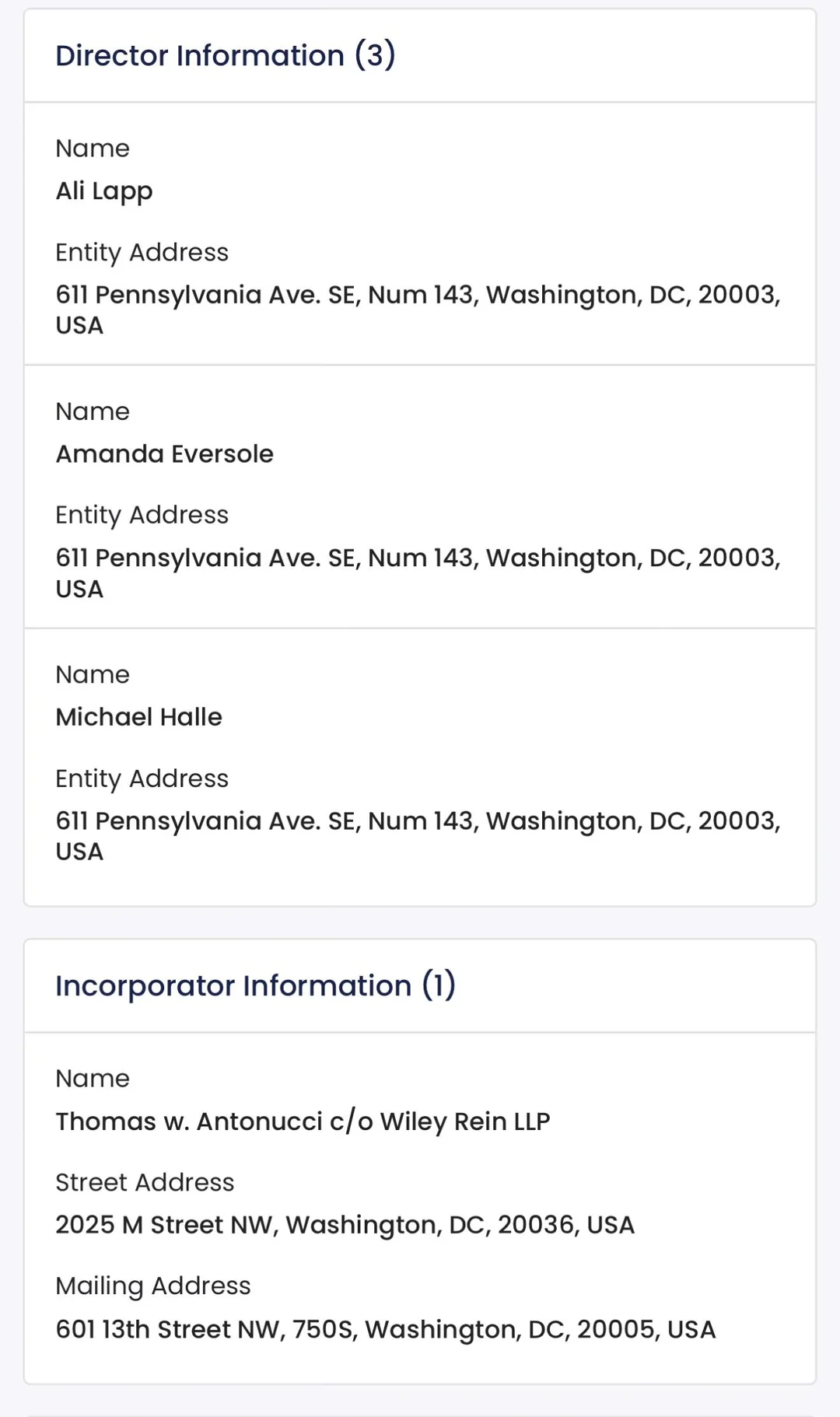
Federal law shields the donors who funded the $800,000 from public disclosure. It does not shield the people who organized and run the 501(c)(4) itself. The DC Department of Licensing and Consumer Protection’s Corporations Division lists the following individuals on the public record for Opportunity Forward Alliance:
- Directors (3): Ali Lapp, Amanda Eversole, and Michael Halle — all listed at the same 611 Pennsylvania Ave SE Num 143 address as the entity.
- Beneficial Owner (sole): Amanda Eversole, separately listed at 601 13th Street NW, 750S, Washington DC.
- Registered Agent: Corporation Service Company, a commercial registered-agent service (1156 15th Street NW Suite 605, Washington DC; agent email compliancemail@cscglobal.com).
- Incorporator: Thomas W. Antonucci, c/o Wiley Rein LLP (2025 M Street NW, Washington DC).
Every fact above is taken directly from the two DC Corporations Division screenshots immediately below. These are the entity’s own public filings.
Like Levine in Channel A, Sherman has the option to publicly disavow this spending and ask the super PAC to stop. As of this writing, he has not.
The eleventh-hour parallel
Three weeks after the $800,000 ad, the same super PAC obligated another $40,000 to Old Town Media for a second pro-Sherman ad — disseminated May 22 and filed as a 48-hour Schedule E. That second filing won't appear in any monthly summary until June 20. And just as Levine's most recent individual contributions of $1,000+ sit in 48-hour PDF notices (Form 6) that won't be itemized into Schedule A until the July 15 quarterly, Sherman's May 22 ad sits in a filing window where the public record can't keep up. Eleventh-hour activity from both campaigns — and from both super PACs supporting them — is happening in the gap between when the money moves and when voters can see it.
Levine · New super PAC, donors after the vote
$776,665 filed. $105K on the books. $671K from donors voters won’t see until after the vote.
A brand-new super PAC, organized just in time to spend in the primary, whose donor disclosures arrive on June 20 — eighteen days after the June 2 primary vote. As of Election Day, the committee has filed $776,665 in independent expenditures while disclosing only $105,000 in receipts.
The $671K gap
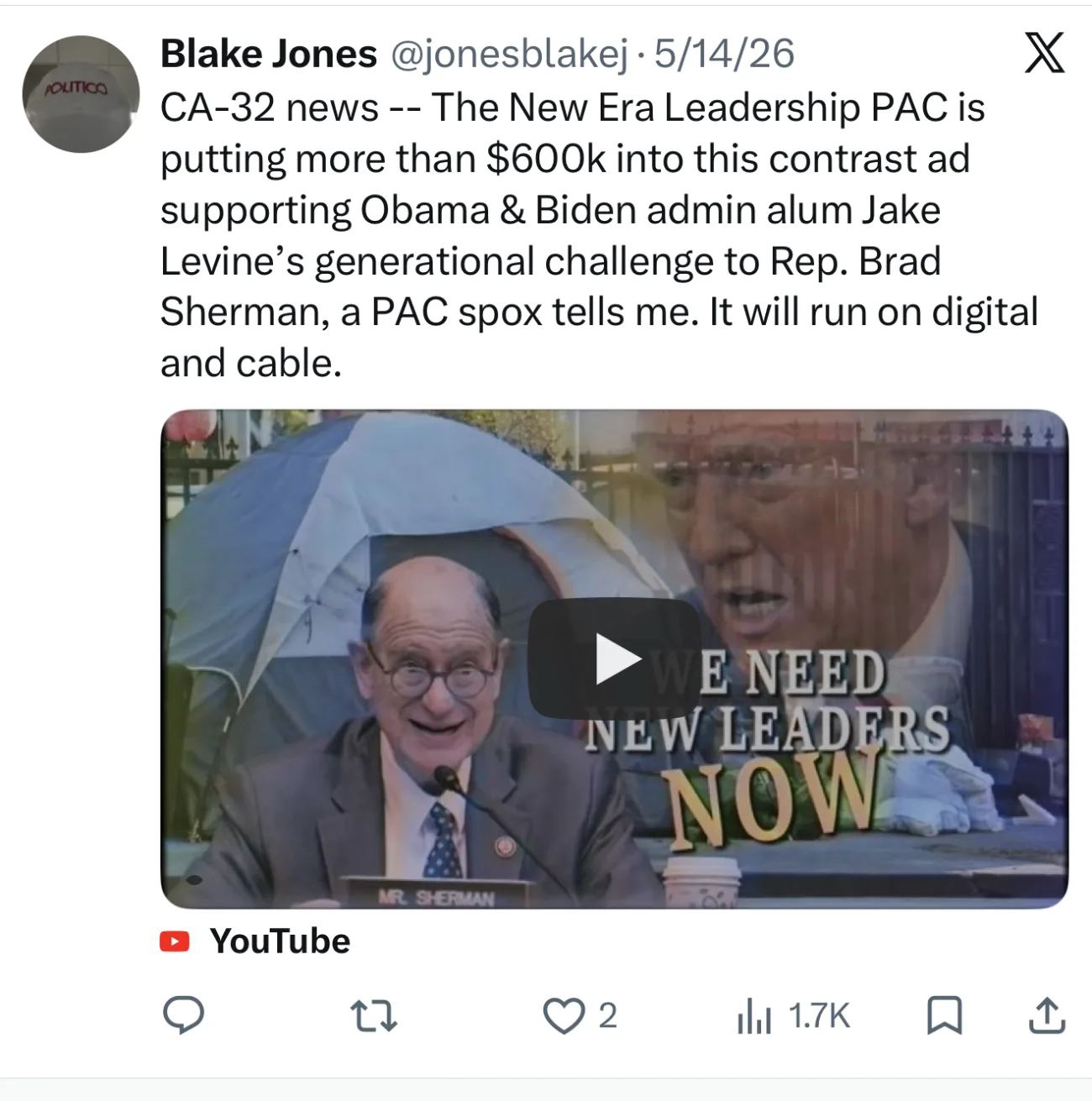
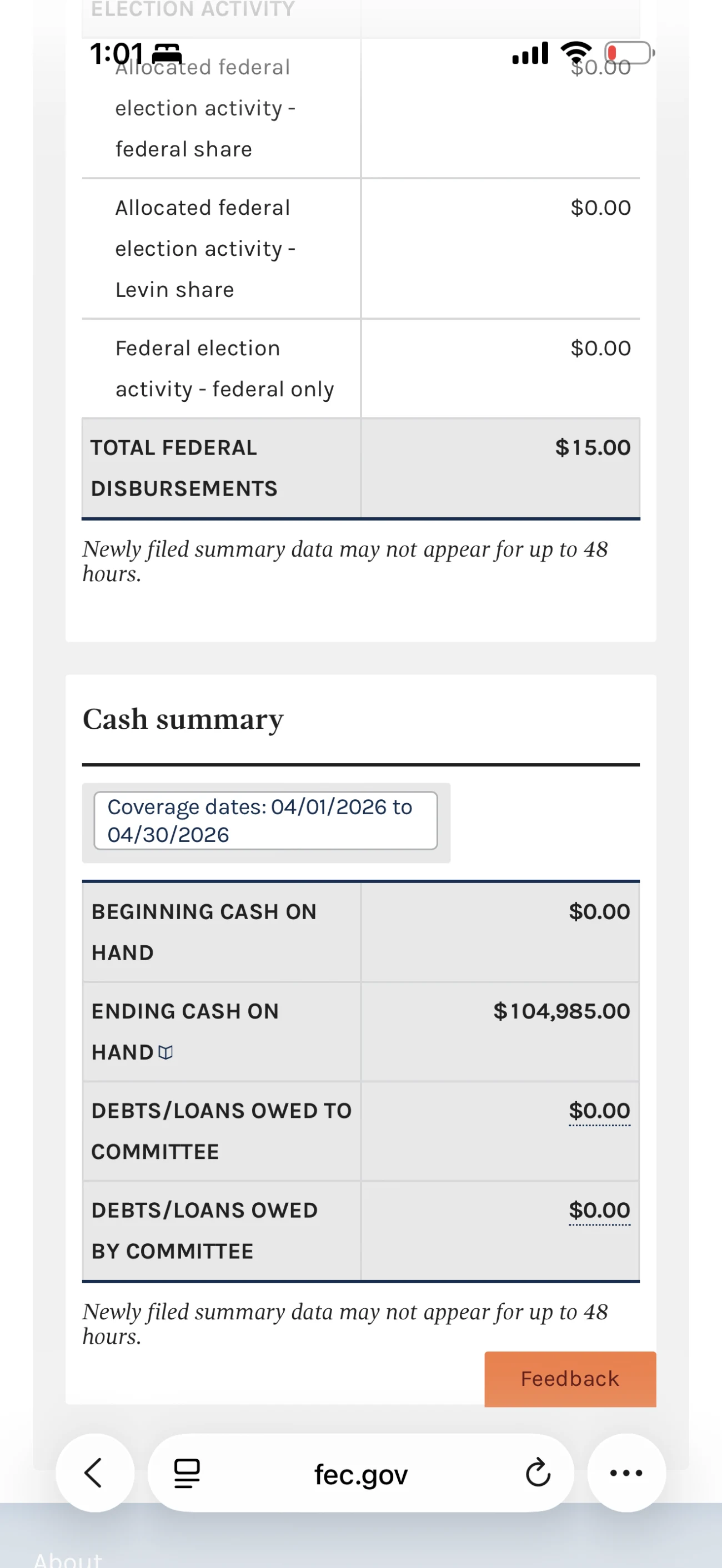
Politico originally reported a ~$600,000 ad buy. As of June 2 (Election Day), New Era Leadership has filed $776,665 in independent expenditures with the FEC — exceeding the announced buy by roughly $177,000, split exactly half-and-half between supporting Levine and attacking Sherman. The committee's latest receipt report (April monthly) shows only $104,985 raised and $15 spent. That leaves a gap of roughly $671,000 in undisclosed contributions backing the spending — contributions whose donors will not be disclosed to voters until the June 20 pre-primary report, which arrives 18 days after the June 2 primary vote.
The super PAC
New Era Leadership (FEC ID C00945824) is an independent-expenditure-only committee — a “super PAC.” It is brand new: its first FEC report opens at $0. It can raise and spend unlimited money, but it legally cannot coordinate with any candidate.
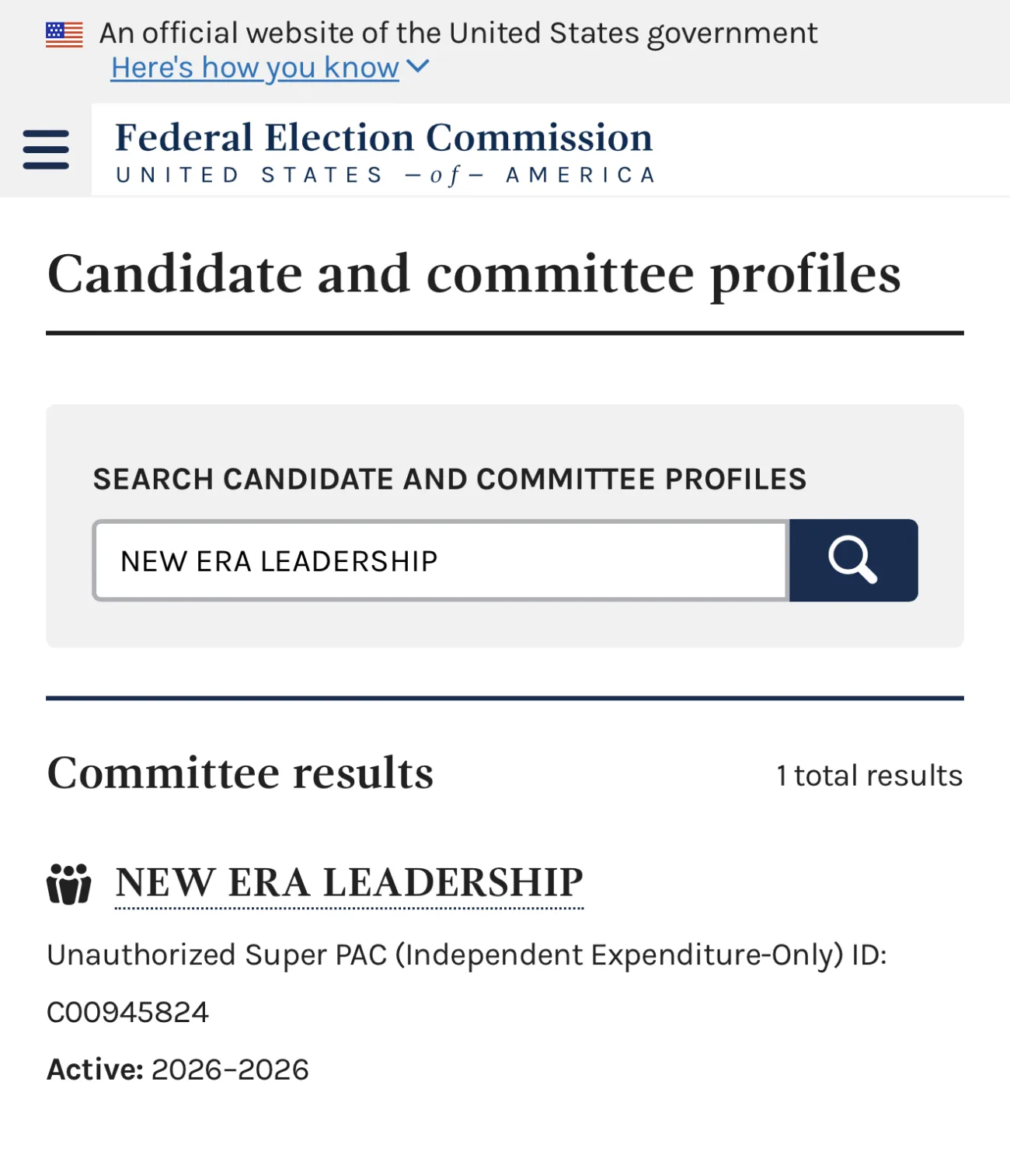
Registered with the FEC on April 1, 2026 — Statement of Organization FEC-1956993, treasurer Tracey Wigglesworth, of Studio City, CA.
The receipts — disclosed donors
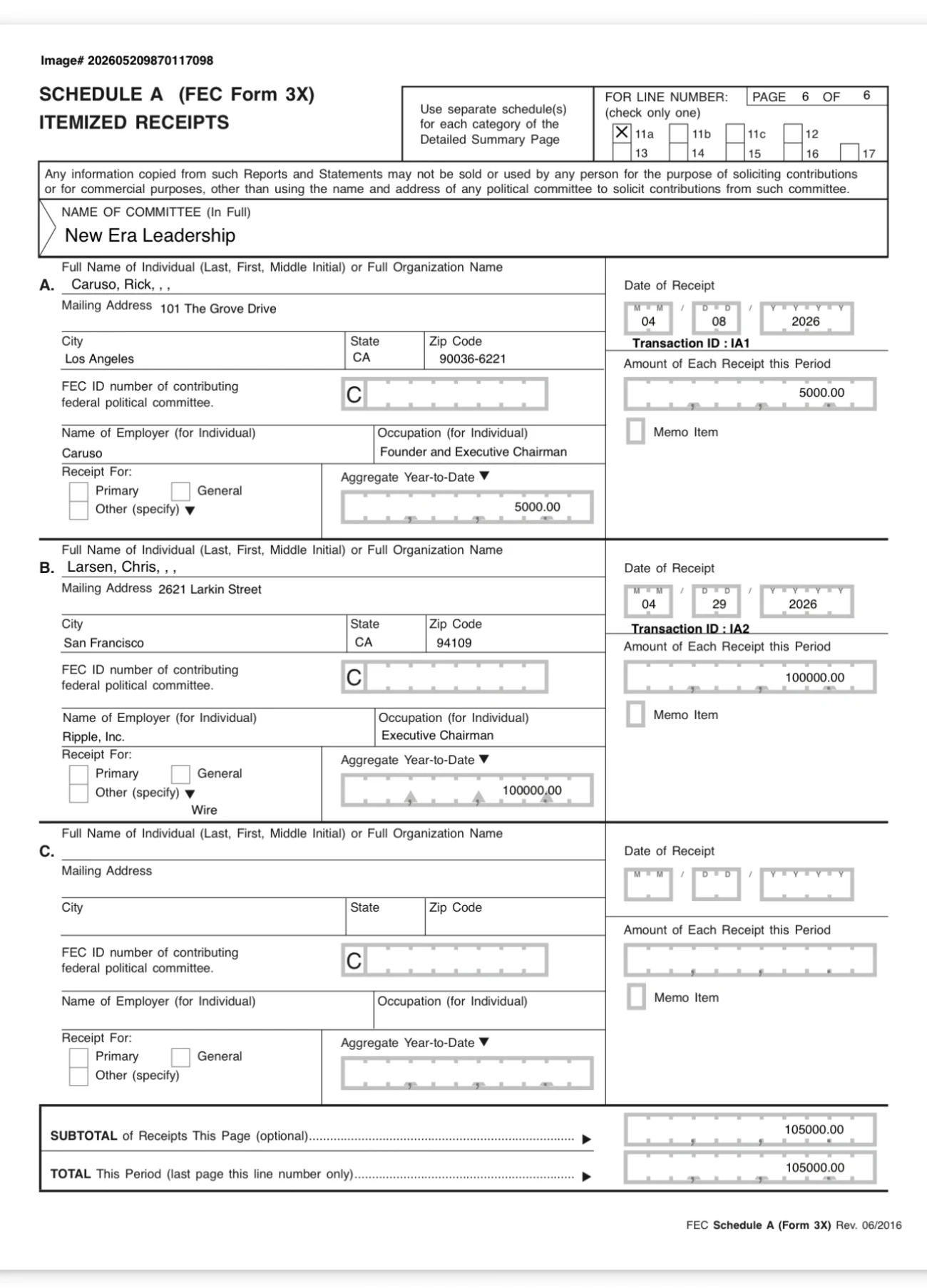
So far, the committee’s disclosed donors are two individuals.
Chris Larsen — $100,000, April 29, 2026. The filing lists his employer as Ripple, Inc. and his occupation as Executive Chairman. Larsen is also one of the country’s largest Democratic and climate donors. We will not tell you why he gave — only that he did, and that the record is public.
Rick Caruso — $5,000, April 8, 2026. A Los Angeles developer; he has endorsed opponent Jake Levine.
Context
The following facts sit beside the donations above. We draw no causal link.
- Ripple, the company, is one of the top funders of the crypto super PAC Fairshake — about $50 million for the 2024 cycle ($25M in 2023, $25M in 2024). CoinDesk, May 2024
- Fairshake and its affiliated PACs spent roughly $139 million in the 2024 cycle, backing winning candidates at about a 91 percent rate. CoinDesk, Dec 2024
Why the money is invisible before the vote
A super PAC must report what it spends almost immediately, but the donors who fund it appear only on its next periodic report. New Era Leadership’s next report is due June 20. The primary is June 2 — so the donors behind the spending stay off the public record until after voters have voted.
Politico reported a roughly $600,000 ad buy in this race (reported, not confirmed spent).
The pledge and Citizens United
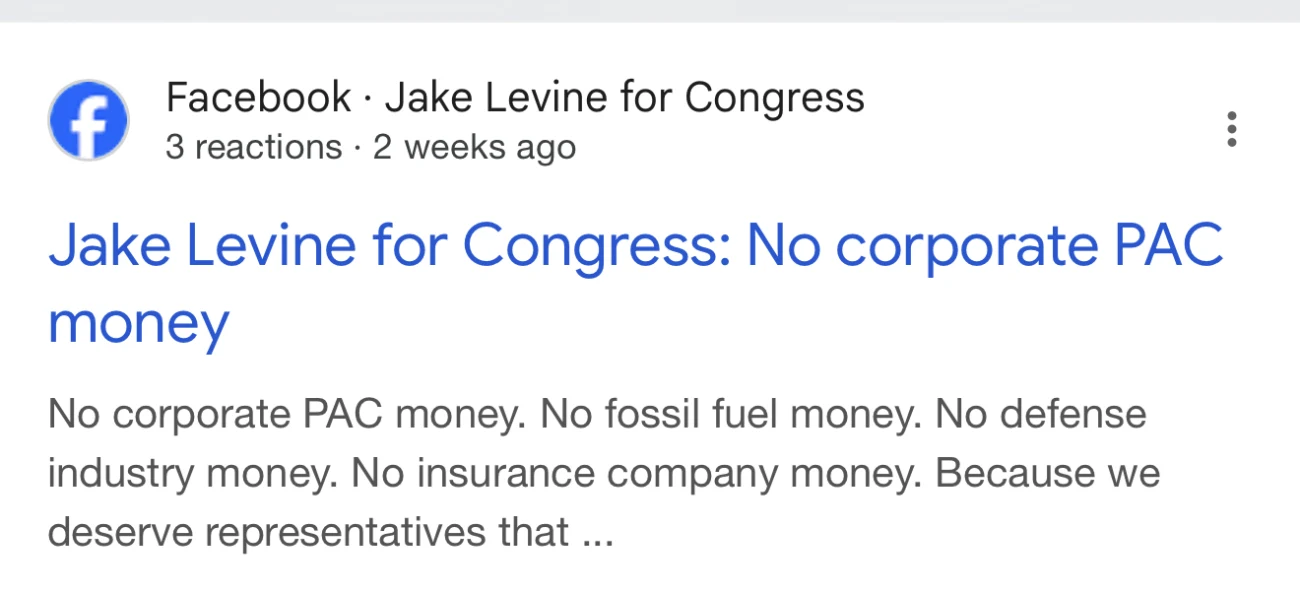
Opponent Jake Levine pledged not to take corporate PAC money — a channel capped near $5,000 per check. Marena Lin takes no PAC money of any kind.
Neither pledge touches a super PAC. One person contributed $100,000 — twenty times the corporate-PAC cap — to a committee a candidate never has to touch, and the pledge stays intact. This is the structure Citizens United created: unlimited outside money, fully legal.
Verify it yourself
- FEC committee profile: fec.gov/data/committee/C00945824
- Schedule A filing (FEC image #202605209870117098): docquery.fec.gov
- Form 1 — registered April 1, 2026: fec.gov → About this committee
- April monthly report ($0 → ~$104,985): fec.gov financial summary
- Politico, ~$600K ad buy: the post on X
- Ripple → Fairshake (~$50M, 2024 cycle): CoinDesk
- Fairshake 2024 spend / win rate: CoinDesk
- Opponent’s no-corporate-PAC pledge: see the screenshot above (his public Facebook post)
The next donor report posts June 20 — watch it.
This is one race. Here is how the system works more broadly —